- trans-: across, on the far side, going beyond
- -place: a particular region, center of population, or location
Materials from my PhD thesis research, (Trans)places to Play. Mapping shared dwellings across prohibitive geographical distance. Publications, blog posts and web experiments are available here. Check back to see what's new!
What's it about? Increasingly, digital networked technologies are becoming places where relationships of all stripes are created, maintained, and deepened. Friends meet through video games, long-distance families and partners hang out through social media, and strangers living in the same neighbourhood collaborate through locative apps. My research looks at the creation of such places as a form of play, how technological platforms shape them, and perhaps how we can better design interaction for transplace-making.
Thesis
My PhD thesis is now available for you to read. You can also cite my thesis.
Mapping Transplaces - an interactive map
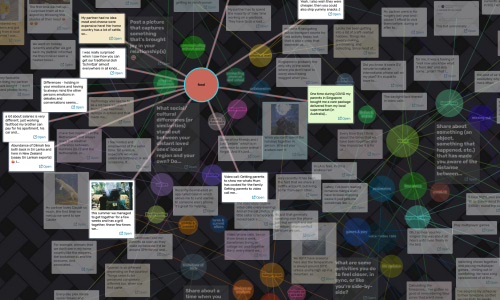
Mapping Transplaces - dynamic story map
Increasingly, technologies like the internet, cellular networks, snail mail, and air travel are bridging bonds between friends, families, and partners living far apart. Emerging from workshop findings, Mapping Transplaces visualises diverse stories about community spaces, homes, and dwellings that transcend national borders, oceans, and time zones, mapping a world of connections across divides. You can contribute your own stories.
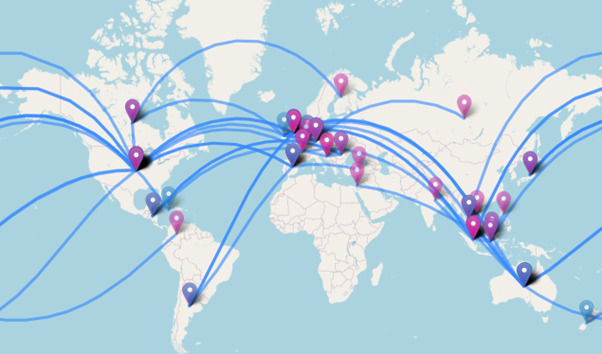
GeoGuestbook
What would you say to someone far away? Leave messages to distant loved ones on this map. You can share your message with the generated link. (Use approximate locations for privacy reasons.)
Place provocations

- Experiment 1: Animal Forum - what do animals think of Kipling's Just So Stories? (Websocket + database integration test)
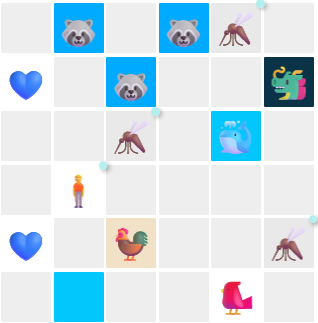
- Experiment 2: Tiles - fill an empty room with tiles together with friends (or strangers)! (Websocket + database, image upload test)
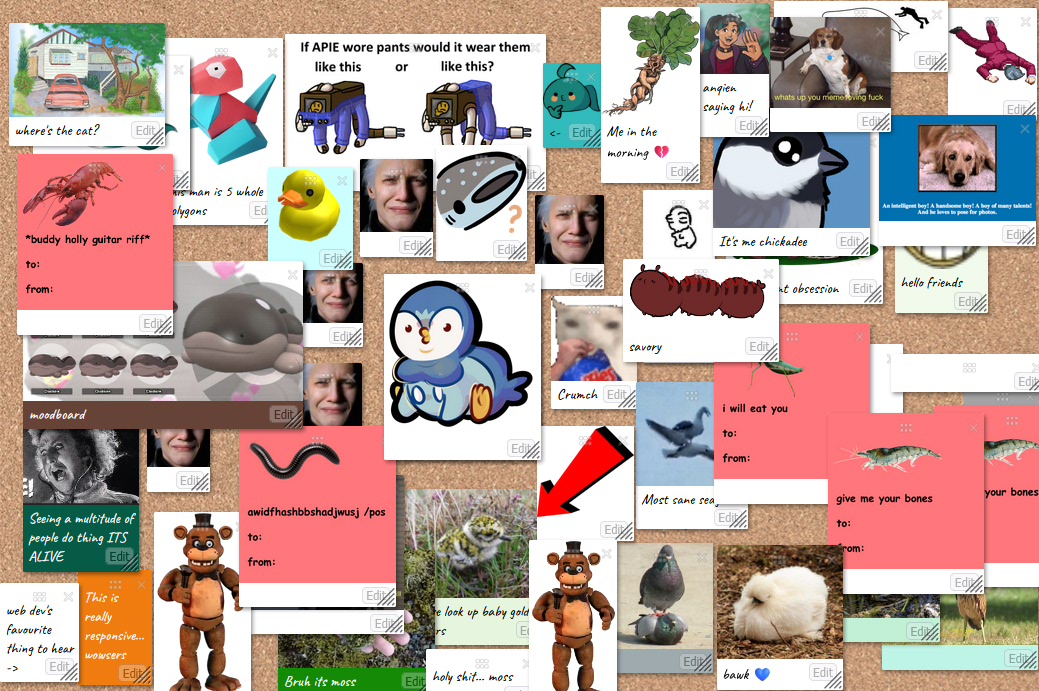
- Experiment 3: Corkboards - Make a real-time collaborative board of polaroids and notes. (Websocket + database, presence indicator test)
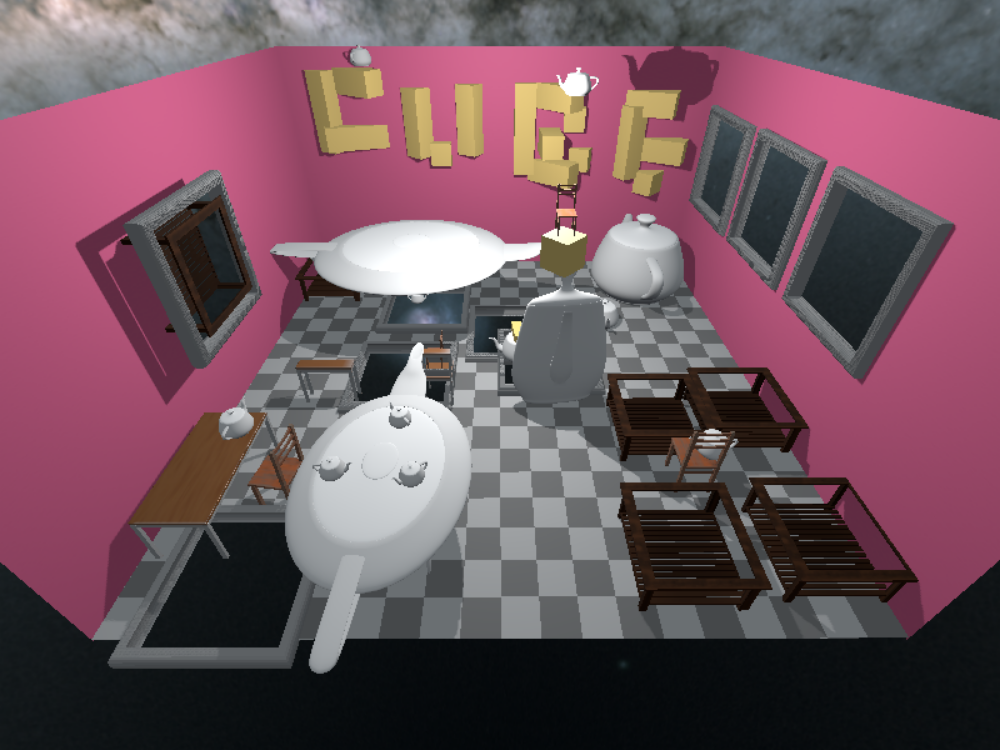
- Experiment 4: Multiplayer Room Designer - Locate and furnish a 3D room together. (Websocket + database + three.js)
Publications
Pla(y)cemaking With Care: Locative Mobile Games as Agents of Place CultivationPlacemaking in Terraforming Games as Relationship-Building PracticeFull paper (Academic Mindtrek 2022)
Abstract
There is growing academic interest in how people use ubiquitous computing devices—particularly smartphones—for cultivating liveable, enjoyable places, replete with layers of living meaning, memory, heritage and social connections. This is a trajectory embraced by two related paradigms of urban studies: slow cities and playable cities. In this paper we investigate how locative mobile games—alternately known as location-based games and pervasive games—can be vehicles of placemaking through play, enhancing the careful processes that form places out of layered networks of affection, habit, and social bonds in the playable city. We highlight carefulness as a latent theme not previously given a close treatment in locative game scholarship, applying it as a lens in our study of locative mobile games. Drawing on autoethnography, we investigate three locative mobile games—Niantic's Ingress and Pikmin Bloom, and Meyran Games’ Plant the World—conducting a qualitative analysis of the findings using Dena's elements-behaviour-experiences (EBE) framework. We distil our findings into four design implications for developing locative mobile games that support pla(y)cemaking with care: physical anchorage, slow mechanics, ownership, and co-construction.
Worlds Apart, Together: Discovering Player Priorities for Cooperative Building in Terraforming GamesInvited talk (Multiplay Space and Place in Virtual Worlds Conference 2022)
Short paper (OzCHI 2023)
Abstract
As more people take to networked technologies as primary sites of relationship deepening, it becomes increasingly important to examine how we design these technologies for connection over a distance. This article presents a pilot study looking at how players build homes together in video game environments. Drawing on phenomenological studies of architecture and geography, we observe and analyse how remote players cooperate to build a virtual place of dwelling in the game Terraria. Via observational and focus group data, we consider how players negotiate their priorities and social relationships throughout the process of creating a shared place of habitation. From this data, we extend Tyler Quiring’s three themes of virtual placemaking into five virtual placemaking priorities—Making more precise; Establishing a centre; Cultivating fields of care; Communality, and; Building as dialogue—to describe how cooperative space configuration activities function to anchor both player-player and player-place relationships. Our findings shed light on how video games can uniquely support placemaking as a means of achieving meaningful co-presence over a distance, offering valuable insights for future design and research into virtual worlds.
Early insights - blog post
Four Place Provocations - research output: Animal Forum, Tiles, Corkboards, Multiplayer Room Designer
Mapping Transplaces - research output
Project blog
A blog (well, two mirrored blogs, actually) to which I post regular updates on my research work.
WordPress | Tumblr mirror